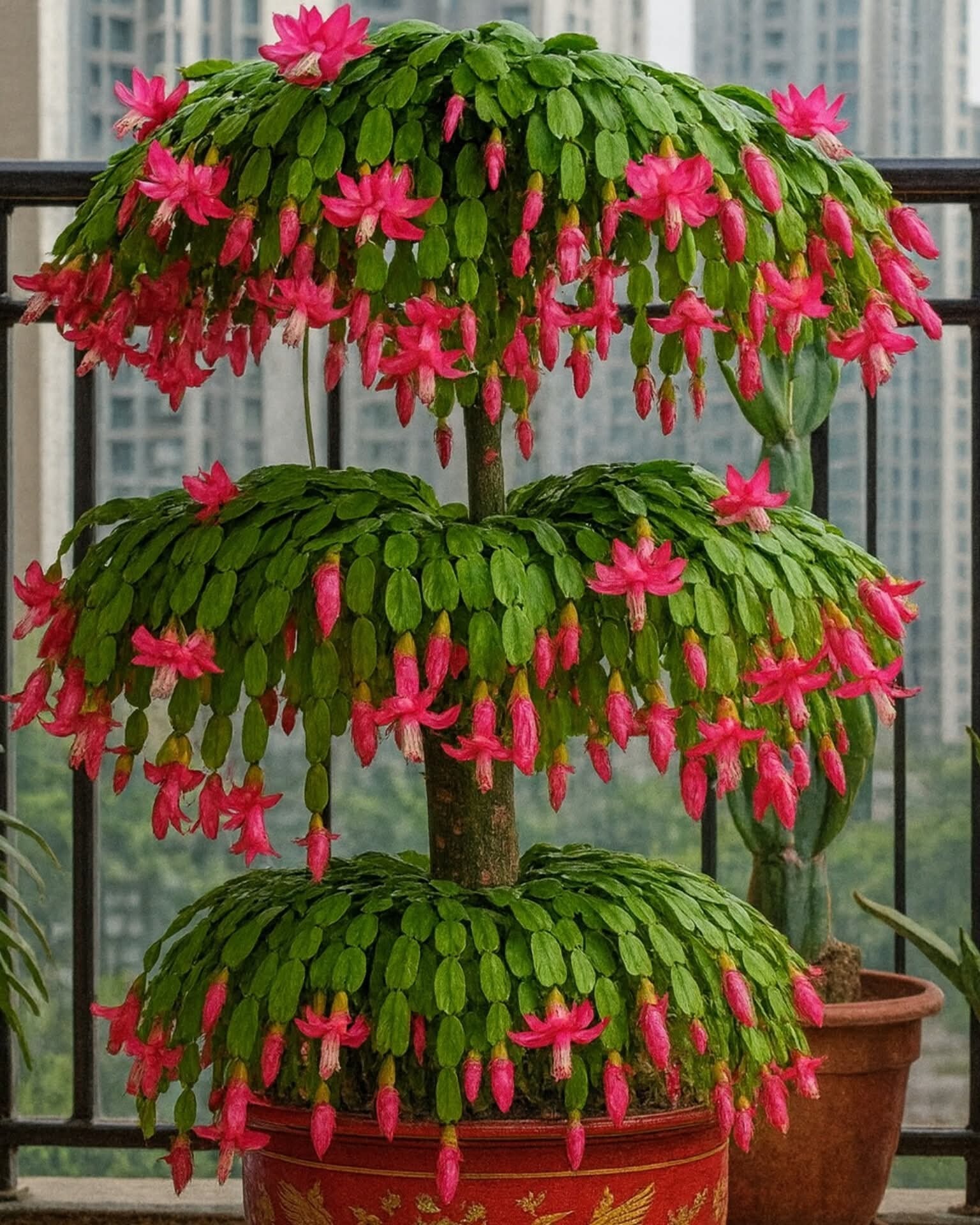
You can admire the Christmas cactus flowers between December and January. Their colors can range from pink to red and from purple to reddish-purple. To prevent the flower buds from wilting before they open, the Christmas cactus must be carefully kept away from drafts and heat sources. Therefore, the Christmas cactus should not be placed near a frequently opened door or too close to a fireplace, stove, or radiator.
2. Where to place it?
The ideal temperature for an indoor Christmas cactus is 20°C (68°F). To prolong its flowering during the winter months, place it in a bright room. Later in the summer, the Christmas cactus can be moved outdoors to a partially shaded location, ensuring that excessive direct sunlight doesn't burn the leaves. In autumn, starting in early September, the plant can be brought indoors. The reduced daylight hours and sun exposure may delay flowering until around Christmas time.
One of the perfect locations to keep the Christmas cactus in your home in December and January is the inside of the windowsill, so the flowers can take advantage of daylight to bloom during the winter.
The plant's elevated position is essential if you have pets such as dogs or cats. Ingesting certain parts of the plant can cause diarrhea or vomiting in pets. Therefore, it should be placed where pets cannot easily reach it. In case of any problems, a veterinarian should be consulted immediately.
3. When should I water the Christmas cactus?
The Christmas cactus originates from the rainforests of South America and therefore prefers a humid climate. It's essential to pay close attention to watering, both in summer and winter. In winter, water it regularly, little by little, ensuring the saucer doesn't become waterlogged, but keeping the soil consistently moist. In summer, the same method applies, with the option of lightly misting the leaves with a spray bottle. The best time to water the Christmas cactus, which needs small amounts of water at a time, is in the evening during the summer months. In particularly dry climates, try keeping it in a room with a small humidifier or other plants.
Advertisements
It is important to avoid waterlogging and to water regularly but not excessively, especially during flowering. Overwatering can cause root rot, which can lead to the plant's death. This rot can also be caused by a fungus, unfortunately not visible externally until the first signs of damage appear. The plant's flowering period can sometimes last from December to February. In any case, once flowering is over, watering can be reduced. Throughout the plant's life, watering should only be done when the soil appears dry on the surface. Watering only once or twice a week may be sufficient in winter.
The Christmas cactus prefers acidic soil, ideally containing peat. Natural fertilizers can be used during the flowering period to provide nutrients. Fertilization should be discontinued once the flowers have faded. If fertilization is desired, it is best done in spring and summer, during periods of active growth.