Kamitetep and their cases
Wall moth larvae, or clothing moths, feed on fur, wool, dead skin fragments, hair and paper. Pierces stored and old clothes, need for detection
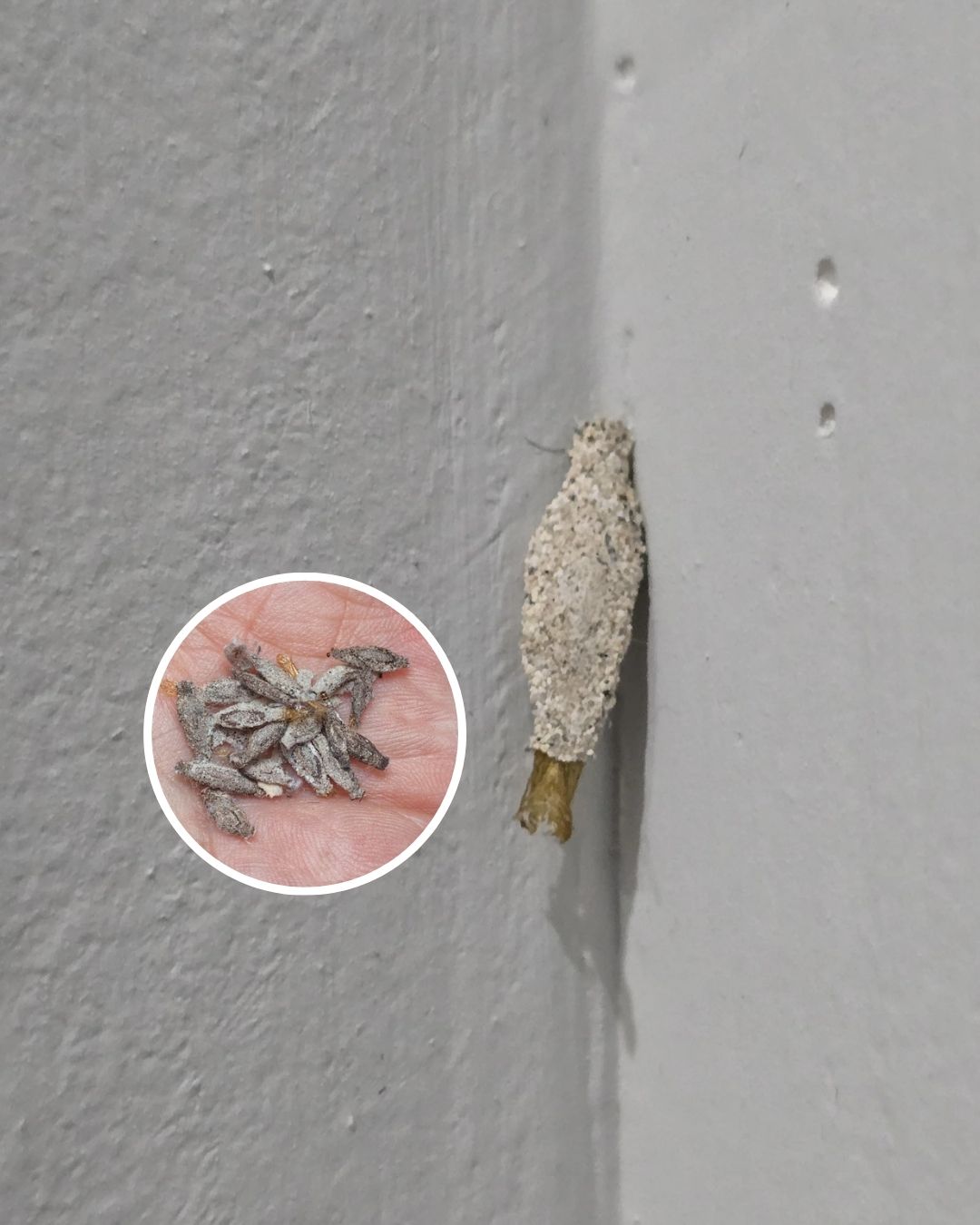
Ironically, kamitetep is more known for its larval stage than its adult moth stage. This is when they appear in gray, flat cocoon-like cases that the caterpillars carry around as a shield while they look for food. When it’s time, the caterpillar uses it as a pupal case while transforming into a fully-grown winged moth, explains EDIS. People may realize they have a bug problem after finding one of these cases with the developing moth inside. Or they may find it eerily empty. The cases camouflage well in gardens, making them harder to spot early.
Read More: 20+ Mosquito-Repelling Plants to Keep Your Yard Pest-Free
Life stages
phereoeca uterella perch on green leaf
There are four life stages of these moths: egg, larva, pupa, and adult, according to Native Pest Management. First females lay tiny eggs in clusters in hidden locations to ensure their survival. Once they hatch, the larvae begin to feed and gather materials for their own cocoon-like structures. They will grow and molt a few times before turning into pupae. Pupae are harder to spot since they remain in their cases until they emerge as adults. Adult kamitetep grows to about half an inch in length, with tiny grayish-brown scales all over the body.
Diet
moth larva in cocoon on old book, feeding on paper or cellulose, macro photo of urban pest, lack of hygiene, humid environment, insects indoors
Source: Shutterstock
Since this species gravitates to heat and humidity, they are typically found in closets, basements, gardens, garages, and attics. There, they have a large supply of organic materials to consume. Their diet includes dust, feathers, wool, spiderwebs, hair, dead insects, lint, silk, paper, and plant debris. For some reason, they don’t seem to like cotton, says Free Malaysia Today. Unfortunately, they can chew through personal items like clothes, rugs, linen, and important documents, which is why kamitetep don’t make good roommates.
Where they hide
Wall moth larvae, or clothing moths, feed on fur, wool, dead skin fragments, hair and paper. Pierces stored and old clothes, need for detection
Search for signs of kamitetep in your home with their diet in mind. Look around storage boxes, especially the ones made of cardboard. Check areas with fabric, such as linen closets and around carpets. Remember to look out for their small, tubular cases, which could be hanging on a wall or ceiling. You may also see little caterpillar-like larvae looking for food near their cases. Additionally, like with other moths, look around light fixtures because adults are attracted to them.
Read More: If You See These Insects in Your Yard, Get Rid of Them Immediately
How to get rid of kamitetep in your home
close shot of the bundle of plaster bagworm nestled.
Since these bugs are attracted to natural materials for food, the first step of extermination is spring cleaning. Focus on vacuuming rugs and furniture, and around spaces like closets, attics, and basements. Place extra attention on corners and potential hiding places. Next, seal any cracks that allow bugs to sneak through or hide eggs. Use caulk or weather stripping around windows and doors. Use a dehumidifier to deter these pests that thrive in moist environments. And if you see the tell-tale cases, get rid of them immediately.