Let excess water drain — never let the pot sit in water
Use room-temperature water — cold shocks the roots
💡 Pro Tip: If your tap water is high in fluoride or chlorine, use filtered or distilled water — peace lilies are sensitive.
🌡️ 3. Temperature & Humidity: Recreate the Rainforest
Peace lilies are tropical. They thrive in warm, humid air — not dry, drafty rooms.
✅ Ideal Conditions:
Temperature
65–80°F (18–27°C)
Humidity
50–60% or higher
✅ How to Boost Humidity:
Group plants together — they create a microclimate
Use a humidifier — especially in winter
Place on a pebble tray — with water (not touching the pot)
Mist occasionally — but don’t overdo it (can promote mold)
🚫 Avoid: Cold drafts, heaters, and AC vents — they dry out the air and stress the plant.
🌱 4. Fertilizing: Feed to Flower
No matter how good the light and water are, your peace lily won’t bloom without nutrients.
✅ When & How to Fertilize:
When: Spring through early fall (growing season)
How often: Every 4–6 weeks
What to use: Balanced liquid fertilizer (10-10-10 or 20-20-20), diluted to half strength
🚫 Don’t over-fertilize — it can burn roots and cause brown leaf tips.
🪴 5. Potting & Repotting: Don’t Let It Get Too Crowded
Peace lilies actually bloom better when slightly root-bound — but if they’re too cramped, they stop flowering.
✅ When to Repot:
Roots growing out the bottom
Water runs straight through
No new growth for months
👉 Repot every 2–3 years in a pot only 1–2 inches larger.
✅ Best Potting Mix:
Well-draining — use a mix for tropical or indoor plants
Add perlite or orchid bark for extra aeration
✅ Bonus: Repotting in spring often triggers new blooms.
✂️ 6. Remove Old Flowers & Leaves
Don’t let spent blooms linger.
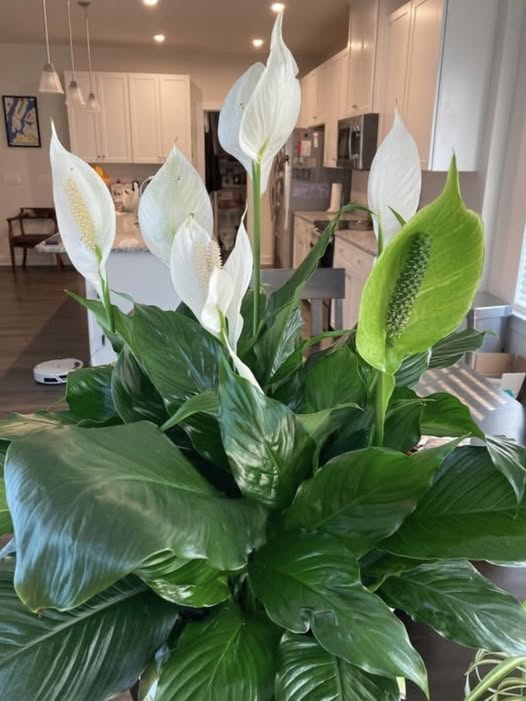
Once the white spathe turns green or brown, gently pull or cut it at the base
This tells the plant: “Time to make a new one.”
Also remove yellow or damaged leaves to keep energy focused on healthy growth
✅ Clean shears help prevent disease.
🌸 What a Healthy Bloom Looks Like
A smooth, white hood (spathe) rising from a central spike (spadix)
Grows taller than the leaves
Lasts 4–6 weeks