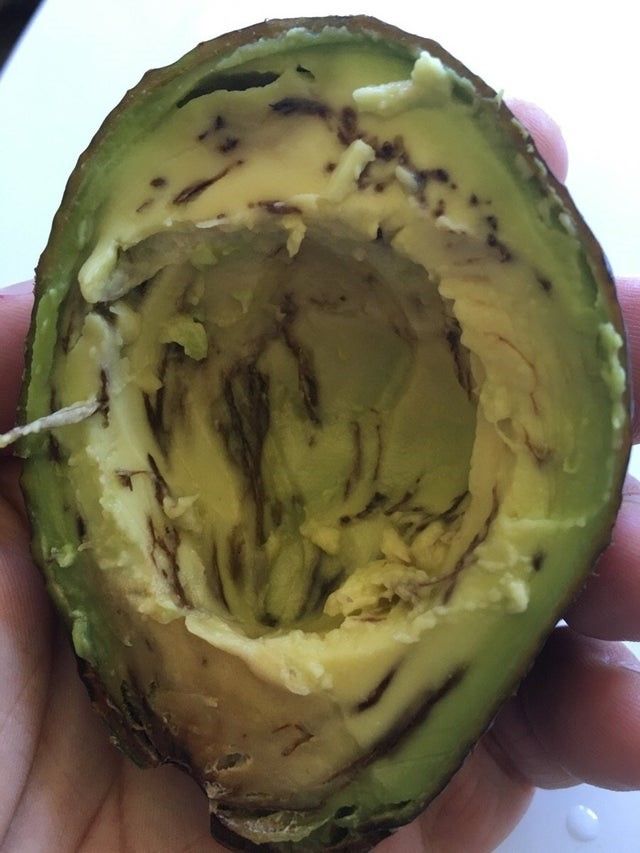
It’s smart to know when avocados are safe to eat, since they can be expensive. In other words, you might be tossing one, thinking it’s bad, when you actually don’t need to. Here are the 5 ways you can know if your avocado is still usable
But first, a little background information: An avocado doesn’t start to ripen until picked from the tree, but the process happens rather quickly afterward. Once ripe, you have a narrow window of time – generally only a few days – before the fruit starts to spoil.
So to determine when an avocado is rotten and no longer good to eat, here’s what to look for:
Overly soft and dented skin. When checking for ripeness, use the palm of your hand to gently squeeze the avocado. Don’t press the fruit with your fingers, as this may bruise the flesh. If the avocado is very firm and doesn’t give at all, it’s under-ripe. If it gives slightly, it’s likely ripe and ready to eat. However, if squeezing leaves a small indentation, it may be too ripe for slicing and will work better mashed.
The fruit is overripe and probably spoiled if pressing leaves a large dent and the fruit feels mushy. Additionally, if an avocado already has a sunken area or looks deflated before you squeeze, it’s likely past its prime