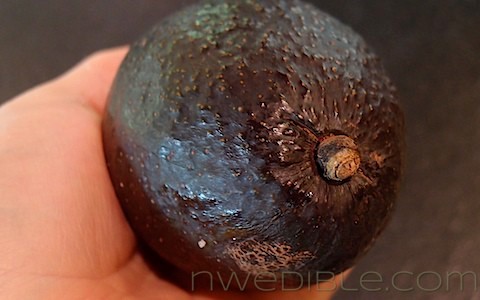
Blackened skin. Some types of avocados undergo distinct skin color changes as they ripen – particularly the Hass variety, which accounts for about 80% of avocados eaten worldwide.
When not fully ripe, Hass avocados have bumpy, bright green skin. It progresses to dark green or brown when ripe. If the skin looks nearly black and the fruit feels mushy upon touch, it’s overripe and likely spoiled.
Other varieties, including the zutano and fuerte, retain their green skin color regardless of how ripe they are. Use other methods – such as feeling for firmness – to determine if they’ve gone bad.
Dark, streaky flesh. Once you cut an avocado, it’s easier to determine whether it has gone bad. Of course, this is only an option after you buy it.
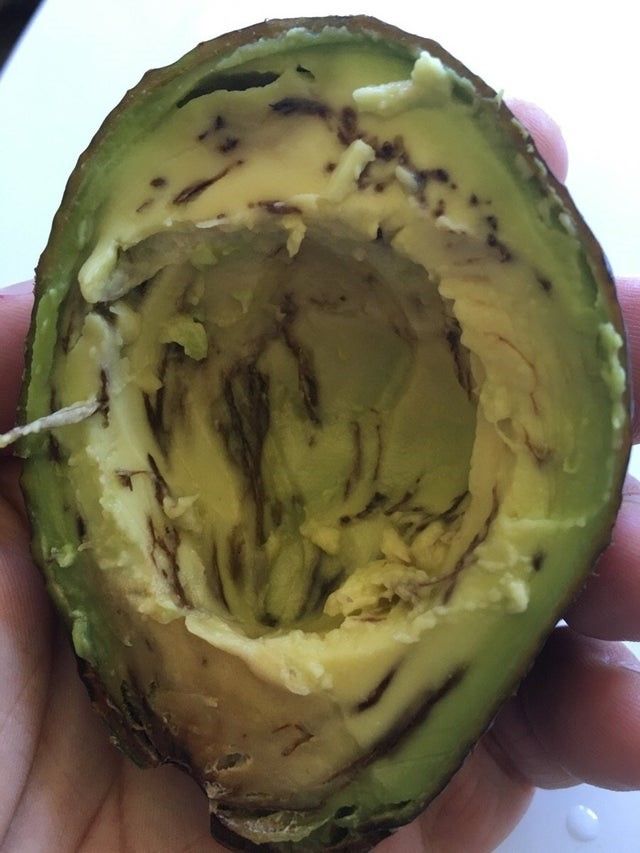
An avocado that’s ready to eat has light green flesh. A little browning on the flesh is still OK. But a rotten one has brown or black spots throughout the flesh. That said, though, it may be that an isolated brown spot is simply due to bruising, rather than widespread spoilage. If that’s the case, it can be cut away.
Another possible sign of rotting is dark streaks in the flesh. Still, some avocados – particularly those harvested from young trees – may have dark streaks even though they’re not rotten. If the fruit looks good otherwise, doesn’t have an odd smell, and doesn’t taste off, it’s fine to eat (although I’m not crazy about tasting something to see if it’s still edible, are you?).
Similarly, the texture of an avocado may be stringy when it has spoiled. Still, if there are no other signs of rot, it’s not necessarily bad. A fibrous texture can also be attributed to growing conditions.
see next page to continue reading
Off flavor or odor. Ripe avocados have a pleasant, slightly sweet aroma and somewhat nutty flavor. As the fruit spoils, it may develop an abnormal taste and odor.