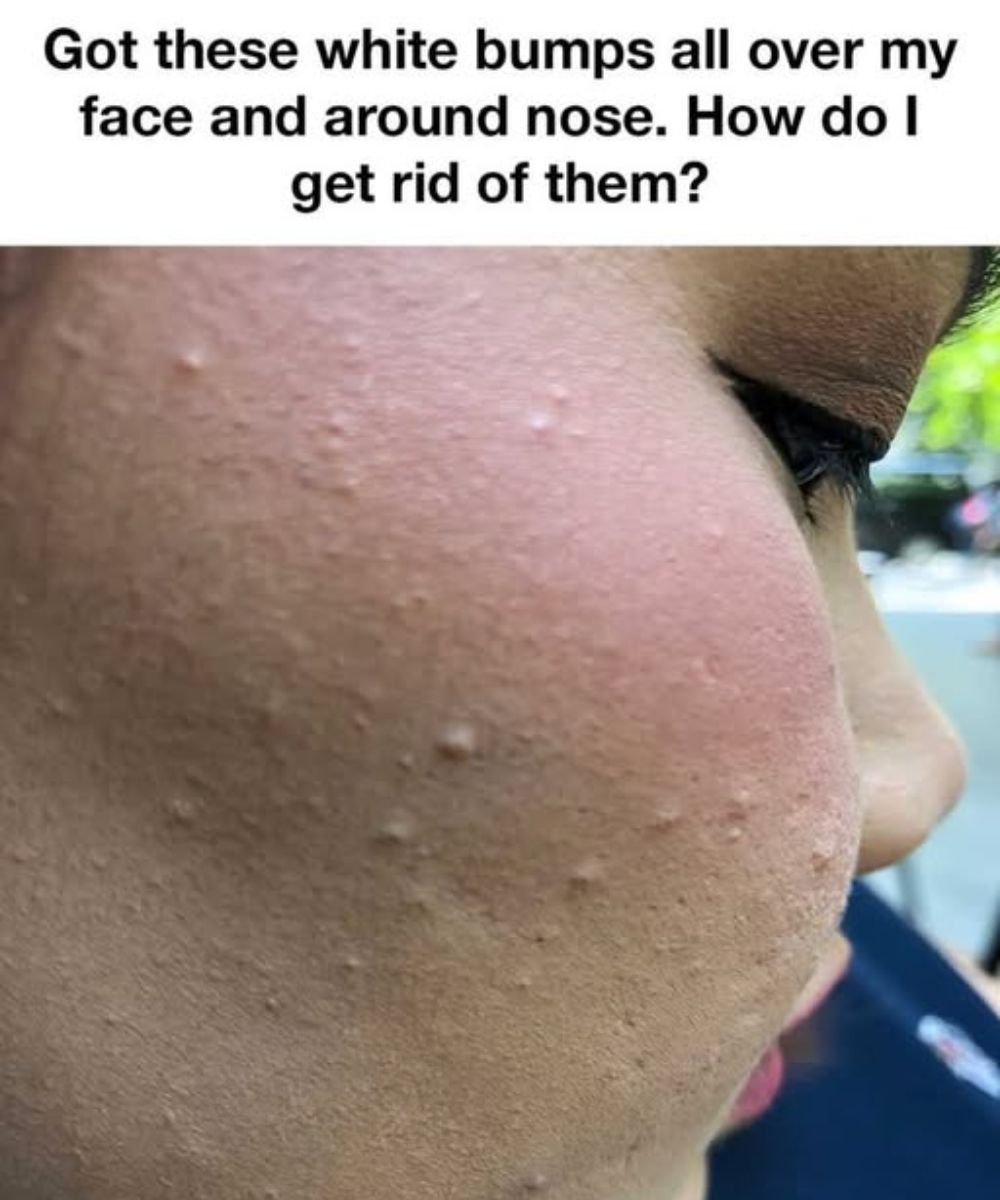
Unlike acne, milia aren’t caused by clogged pores or excess oil. Instead, they develop when dead skin cells fail to shed properly. Sun damage, certain skincare habits, or skin injury can all contribute. Because they stay under the skin and don’t become inflamed, they are frequently mistaken for whiteheads but behave very differently.
2. Why Milia Are Harmless but Hard to Get Rid Of
Although milia pose no health risks, their stubborn nature can be frustrating. They don’t respond to typical acne treatments, and squeezing them won’t work—mainly because they’re not connected to pores at all.
Their persistence stems from their deeper placement within the skin. Since they can’t be emptied like pimples, many people eventually turn to professional help or targeted skincare methods to address them.
3. Common Causes Behind Milia Formation
A leading cause of milia is skin trauma. Burns, blisters, sunburn, and even overly harsh exfoliation can disrupt the skin’s natural shedding cycle. When this happens, dead skin cells may become trapped and form milia.
Heavy or occlusive skincare products are another frequent culprit. Creams containing thick oils or waxes can create a barrier on the skin, making it difficult for dead cells to shed. In some cases, genetics or certain medical conditions may also influence milia development.
4. How Milia Differ From Other Skin Conditions