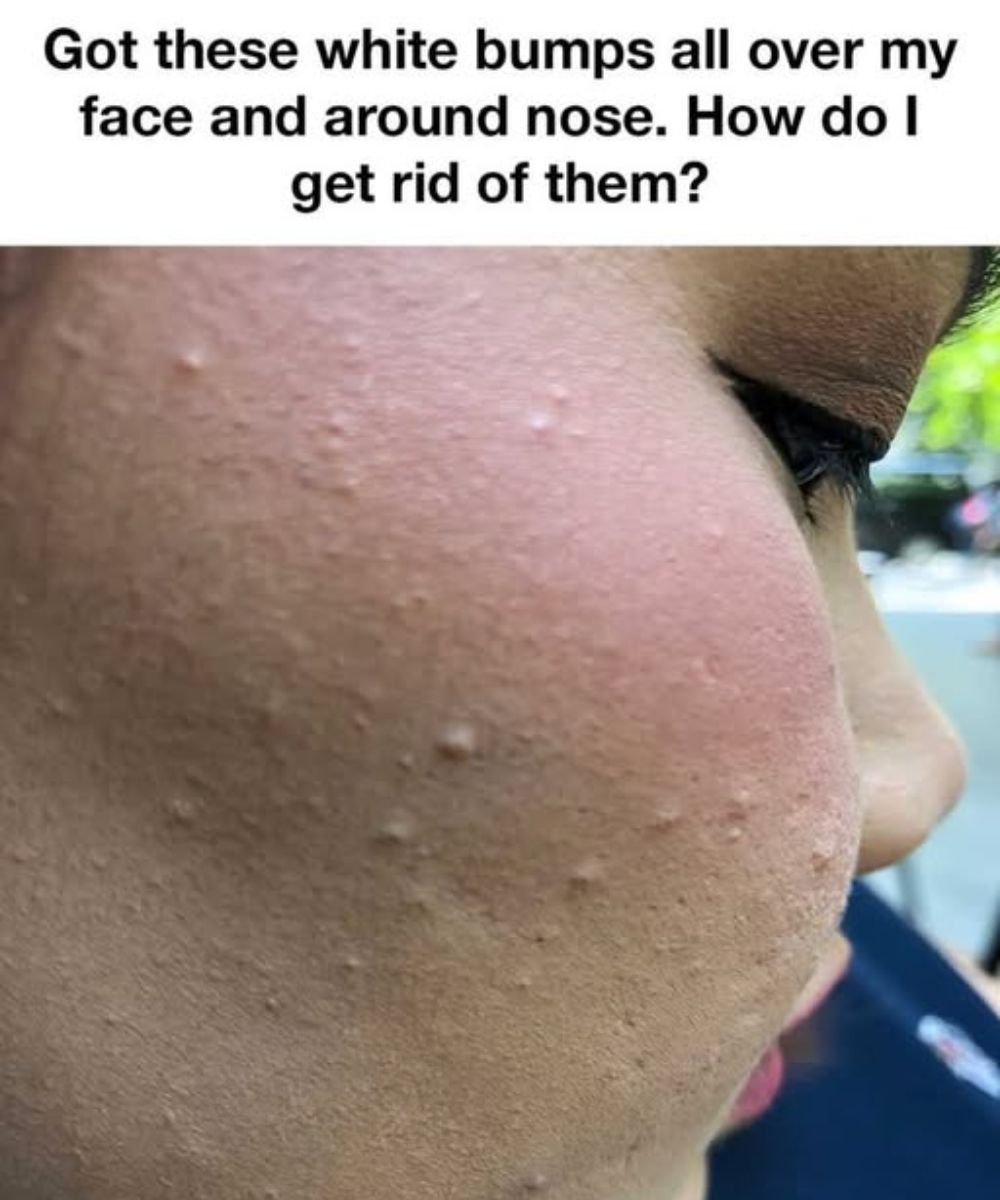
Because milia appear as small bumps, they are often confused with acne or sebaceous hyperplasia. But key differences exist.
Milia do not involve inflammation, bacteria, or hormone fluctuations.
Sebaceous hyperplasia, by contrast, involves enlarged oil glands that create yellowish bumps with a visible center. These are usually larger than milia and require different treatment. Recognizing the difference ensures you choose the right approach.
5. Professional Extraction: The Quickest and Most Reliable Method
For fast, effective removal, professional extraction remains the gold standard. Dermatologists and licensed estheticians use a sterile tool to make a tiny opening in the skin so the trapped keratin can be safely released.
When performed properly, this method carries minimal risk and provides immediate results. However, it’s essential to choose a trained professional to avoid scarring or infection.
6. Topical Retinoids: A Dermatologist-Backed Solution
Dermatologists often recommend topical retinoids—like tretinoin or adapalene—to help treat and prevent milia. These vitamin A derivatives accelerate skin cell turnover, encouraging dead skin cells to shed before they can become trapped.
Retinoids work gradually and require consistent use. While effective, they must be used carefully to avoid irritation, dryness, or peeling.
7. Over-the-Counter Exfoliants: Gentle Ways to Manage Milia
If you prefer accessible skincare options, OTC exfoliants can help. Products containing AHAs or BHAs exfoliate the skin, smooth its texture, and support regular cell renewal—reducing the chance of milia forming.
Start slowly, as excessive exfoliation can irritate the skin and actually worsen the condition. Gentle, consistent use is key.
8. Home Remedies: Natural Options Worth Trying
Several natural methods can support milia prevention. Steaming the face softens the surface and promotes natural exfoliation. Homemade scrubs—such as sugar mixed with olive oil—can help loosen dead skin cells when used gently.
Honey masks are another popular remedy due to honey’s natural soothing and mild exfoliating properties. While these approaches aren’t as strong as clinical treatments, they can be budget-friendly additions to your routine.
9. Steering Clear of Heavy Creams: Simple but Effective Prevention
Avoiding thick, occlusive creams is a straightforward way to reduce milia risk. Opt instead for non-comedogenic products designed not to trap debris or clog the skin.
Lightweight moisturizers and breathable formulas support healthy skin turnover and reduce buildup under the surface.
10. Milia Prevention Strategies
Beyond choosing lighter skincare products, a few additional habits can help keep milia at bay:
Exfoliate regularly—but gently.
Use a mild, effective cleanser.
Avoid excessive scrubbing or irritating tools.
Protect your skin from the sun with daily SPF.
Sun exposure can impair the skin’s ability to shed properly, increasing the likelihood of milia.
11. When It’s Time to See a Dermatologist
Although milia are harmless, professional help may be necessary if they become widespread, resistant to treatment, or emotionally distressing. A dermatologist can diagnose the cause and recommend the most appropriate removal or prevention strategy.