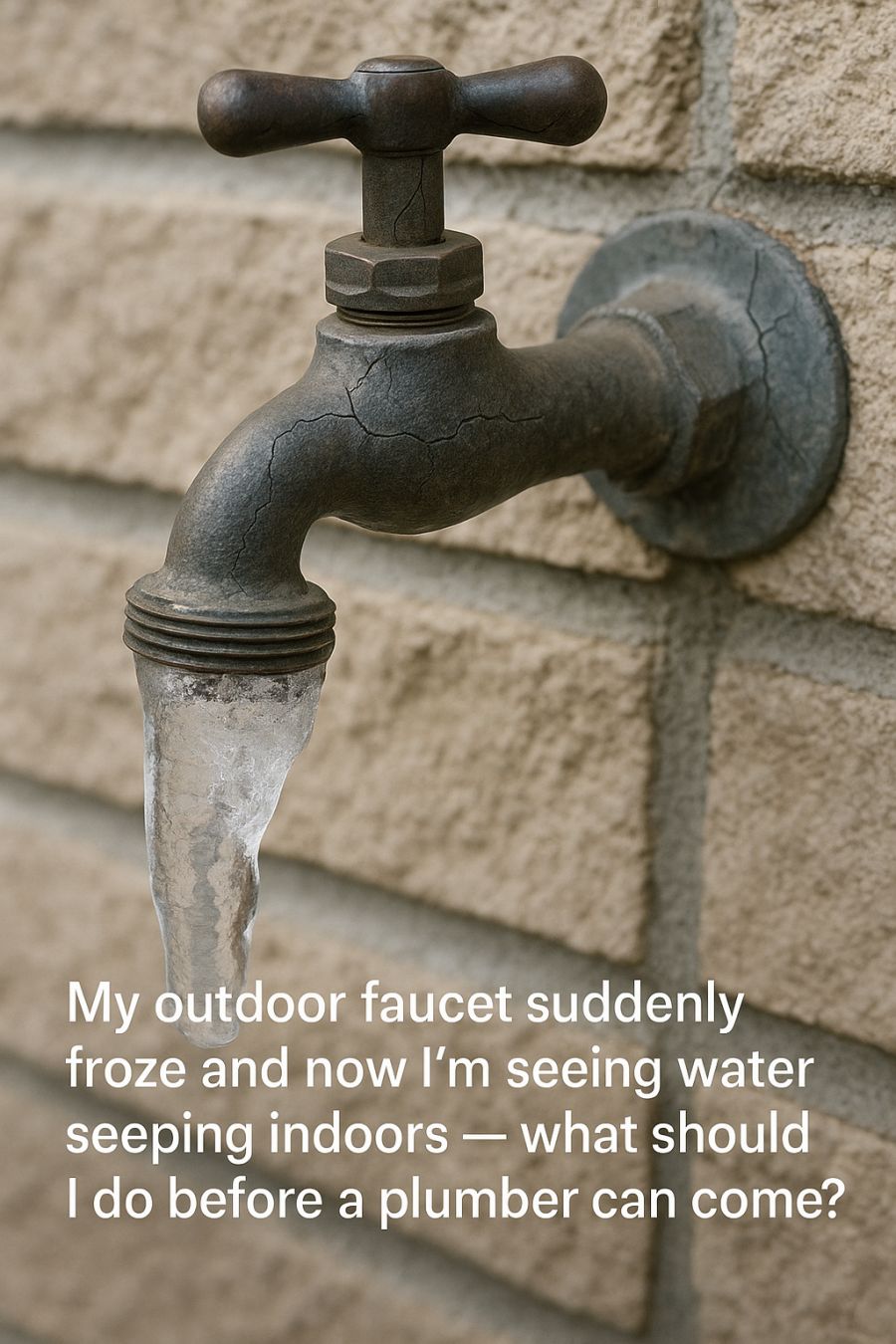
Winter brings with it the beauty of snow and ice, but also the risks associated with freezing temperatures. One common household issue during this season is the freezing of outdoor faucets. When temperatures drop significantly, the water inside a hose bib can freeze and expand, potentially leading to cracks in the pipe or faucet. This can result in water leaking indoors, causing damage to your home.
If you find yourself in this situation, it’s important to act quickly to minimize water damage and ensure your home remains safe until professional help arrives. While waiting for a plumber, there are several steps you can take to manage the situation effectively and prevent further issues.
1. First Priority: Shut Off the Water Supply Immediately
The first and most crucial step when you notice water seeping into your home is to shut off the water supply. This will prevent additional water from flowing into the damaged area, reducing the risk of further damage. Locate the valve that controls water flow to the outdoor faucet; it’s typically found inside your home, near the point where the pipe exits the exterior wall. Turn the valve clockwise until it is completely closed.
If you’re unable to locate or access the specific shut-off valve for the outdoor faucet, you may need to turn off the main water supply to your home as a temporary measure. This valve is usually located in the basement, crawlspace, or utility room, and can be identified as the one closest to your water meter. Turn it until the water stops flowing, then proceed with the next steps to manage the situation.
2. How To Find and Use the Correct Shut-Off Valve
Finding the correct shut-off valve is essential in controlling the water flow to your outdoor faucet. Begin by checking your basement or crawlspace; the valve is often located on the wall nearest to the outdoor faucet. It may be a lever or a round handle. If it’s a lever, turn it perpendicular to the pipe to shut off the water. If it’s a round handle, turn it clockwise until it stops.
If you have a newer home, there might be a labeled manifold system where each valve is clearly marked for different areas of the house, including the outdoor faucets. If you’re unsure, consult your home’s plumbing blueprint or reach out to a professional to guide you. Knowing the location and operation of these valves can save crucial time in an emergency.