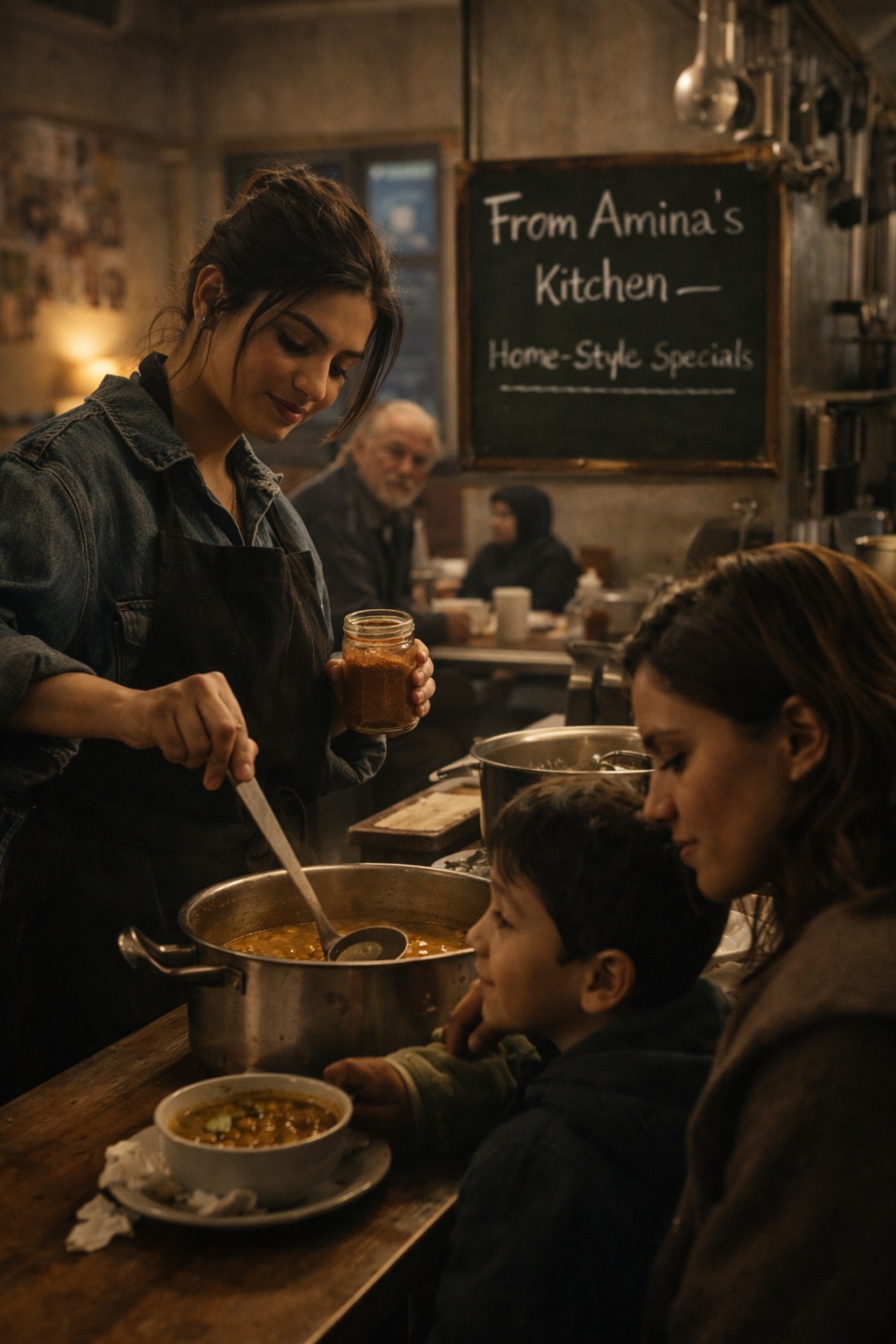
The Taste of Home —
On cold winter mornings in Detroit, the streets were quiet before dawn. The city lights reflected on wet sidewalks, and the only sound near Maple Avenue was the hum of an old neon sign that read: Harris Diner — Open Early, Close Late.
Inside, the kitchen was already alive.
Amina tied her apron, tucked her hair beneath a faded scarf, and switched on the stove. The heavy metal pans, scratched and worn, felt familiar now — almost like companions. She had been working here for three years, ever since she arrived in the United States with two suitcases, a student visa that turned into survival work… and a heart full of unfinished dreams.
Her mother’s voice still echoed in her memory:
“Ya benti, cooking is not just feeding people.
It is giving them a piece of your soul.”
But at the diner, there was no room for the soul — only orders.
Eggs. Pancakes. Hash browns. Burgers.
Fast food for fast lives.
Amina worked silently while the radio in the corner played faded country songs. The scent of frying oil filled the kitchen — heavy, tired, nothing like the warm meals back home. Still, she didn’t complain. In America, she had learned that silence was also a kind of strength.
By 7 a.m., customers filled the small dining room — factory workers starting night shifts, nurses finishing morning rounds, students rushing to class. Mr. Harris stood near the register, watching the clock and counting receipts.
“You’re my best cook,” he told Amina one day, half kindly, half as a reminder of responsibility.
She smiled politely.
But inside, she felt like a shadow.
At lunch, a delivery driver entered — an immigrant like her. He spoke with an accent, asked for something warm, something simple.
“I’m sorry,” Mr. Harris replied. “We only serve what’s on the menu.”
Amina hesitated… then whispered, “Let me handle this one.”
She went to her locker, opened a small tin box wrapped in cloth. Inside were little bags: cumin, turmeric, smoked paprika, dried coriander — treasures from a world far away.
She cooked lentils slowly, letting the smell rise and fill the kitchen with memories — the sound of the wind in Casablanca, the smell of fresh bread from street vendors, her mother humming while cooking.
The driver took one spoonful…
…and closed his eyes.
“This tastes like home,” he whispered.
Amina nearly cried. She hadn’t heard that word spoken with warmth in years.
That evening, Mr. Harris tasted the soup. He paused longer than usual.
“We don’t make food like this here,” he said.
Amina lowered her eyes. “I know.”
He looked at the pot again.
“…Maybe we should.”
The next week, a handwritten sign appeared on the wall: