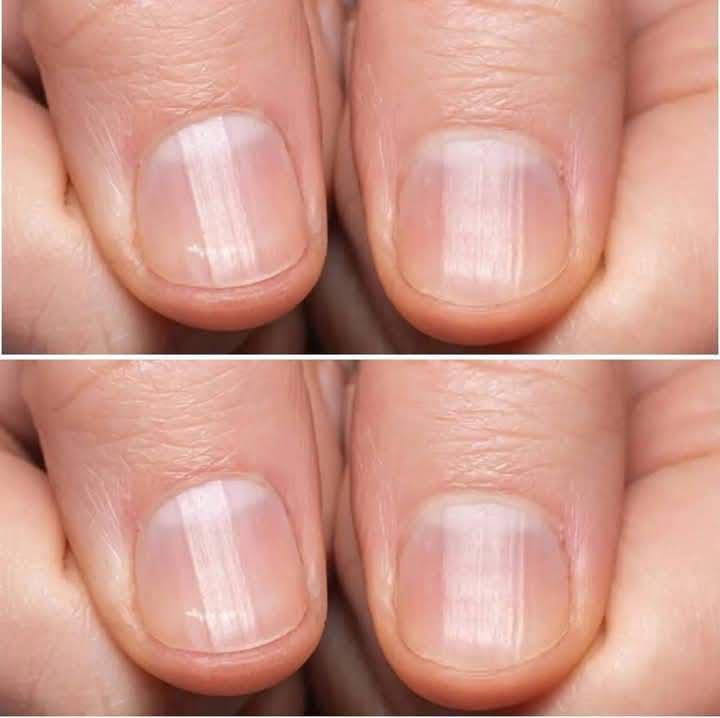
Horizontal Ridges (Beau’s Lines):
These are depressions that run across the width of the nail. Beau’s lines may indicate a disruption in nail growth, often caused by illness, injury, or severe stress. Conditions like diabetes, zinc deficiency, or even high fever can lead to these ridges.
Discolored Stripes:
These can range from white to dark brown or black and might appear as a single stripe or multiple bands. White stripes may indicate mineral deficiencies, while dark stripes could be a sign of more serious conditions, such as melanoma, and should be evaluated by a healthcare professional.
Muehrcke’s Lines:
These are paired, white horizontal lines that do not move as the nail grows. They are often associated with low protein levels, liver disease, or kidney issues.
Splinter Hemorrhages:
These are thin, dark red or brown lines under the nail, resembling splinters. They may result from trauma or could indicate underlying cardiovascular issues, such as endocarditis or vasculitis.
Understanding the type of stripe on your nails is the first step in identifying potential causes.
Causes of Striped Nails
Striped nails can result from various factors, ranging from benign to serious. Below are some common causes:
1. Aging
Vertical ridges are often a natural part of aging. As we grow older, the body produces less oil and moisture, which can affect nail health. These ridges are usually harmless and do not require medical attention.
2. Nutritional Deficiencies
The appearance of stripes, especially discolored ones, may signal deficiencies in essential nutrients such as iron, zinc, calcium, or vitamins like B12. For example, white stripes or spots on the nails can indicate a lack of zinc or calcium, while brittle nails with ridges may suggest a deficiency in biotin or other key nutrients.
3. Dehydration
Dehydration can cause vertical ridges and dryness in the nails. Ensuring adequate water intake and using moisturizers or cuticle oils can help improve nail health.