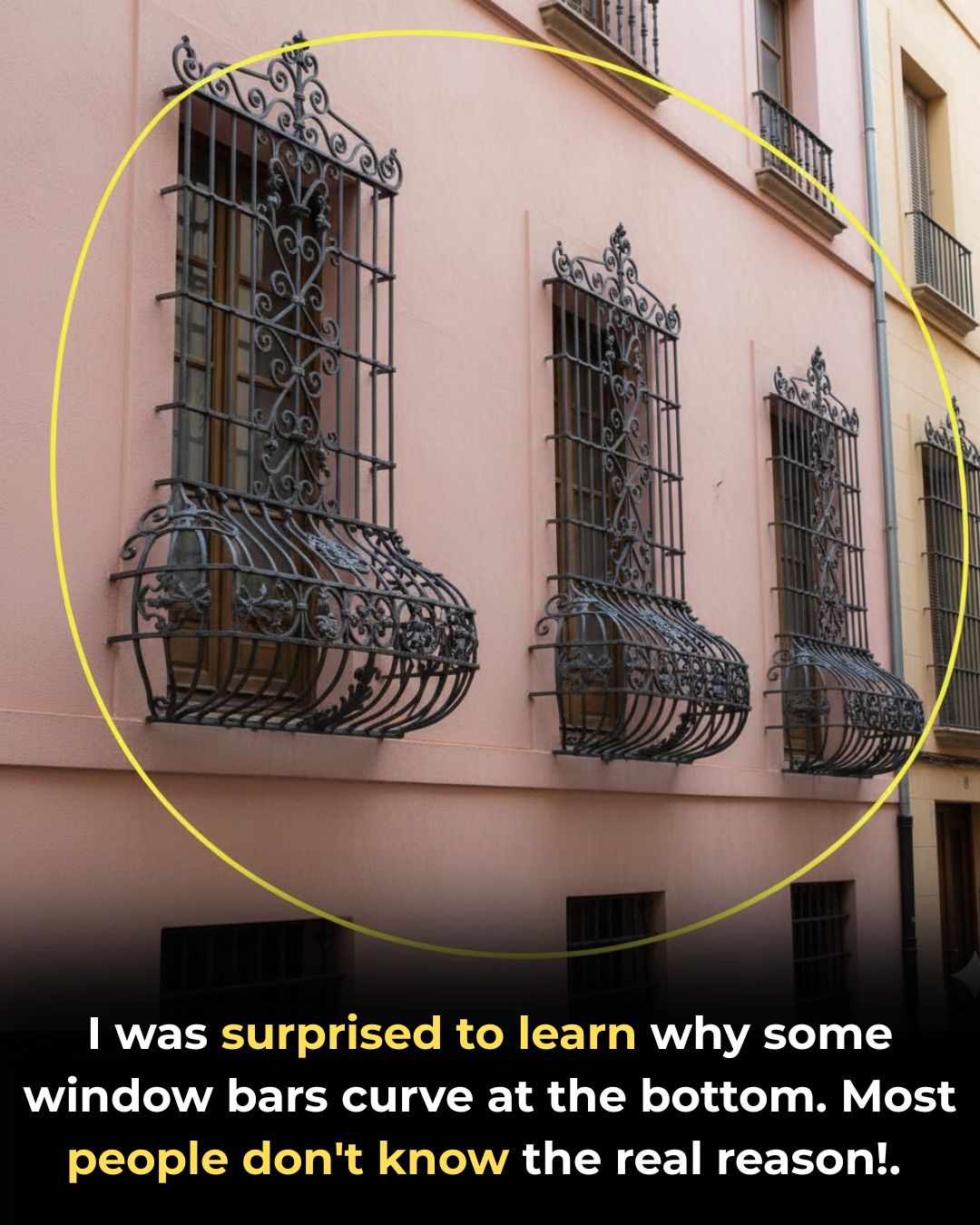
Why Some Window Bars Have a “Potbelly” — And What Those Curves Are Really For
Have you ever walked past a building and noticed window bars that seem to bulge outward, creating a small curved pocket or “potbelly”? At first glance, you might assume the curves are just decorative flourishes — a stylistic touch added by the builder. But those protruding window bars actually serve several clever and practical purposes.
In this article, we’ll explore why some window grills bend outward, what those potbellies are used for, and how these charming curves combine both beauty and security.
What Are Window Bars Used For?
Window bars, often called security bars or grilles, have been used across cultures for hundreds of years. Their primary function has always been the same: to reinforce windows and protect buildings from intruders.
By adding a physical barrier, they make it much harder for someone to break in through the window — one of the most common entry points for burglars. Over time, however, window bar designs have evolved beyond straightforward vertical and horizontal lines. In many places, architects and homeowners began adding graceful curves. This raised a natural question:
Why do some window grills have curves?
That brings us to the unique feature known as the potbelly.
The Unique Feature: What Is a Potbelly?
Not all security bars are flat and rigid. Potbelly bars include a rounded outward bulge in the middle section, giving the window bars a fuller, more three-dimensional look.
This curve isn’t just decorative. The design adds extra functionality, expands the usable space around the window, and offers flexibility in how the window area is used — especially in urban environments where every inch counts.